

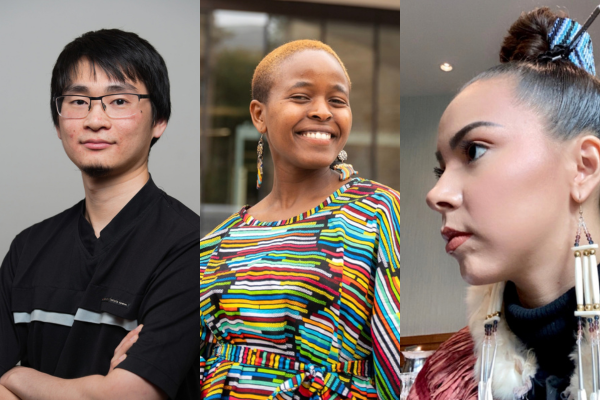
At the LEVEL Youth Policy Program (YPP), you’ll learn how policy works and meet peers and mentors who deeply care about changing communities and systems for the better. Policy change often happens only when pressure is applied from different directions. Our alums profiled here are each working on public policy in distinct ways. Njoki, a changemaker and academic. Katisha, who analyzes and advises on Indigenous priorities at home and internationally. And Jimmy, filling an essential gap in B.C.’s rural and remote communities.
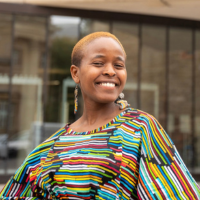 Njoki Mbũrũ connects the dots across systems
2020 cohort
Born in Kenya, Njoki has lived and studied around the world. This year, she graduated with a Master of Public Policy from the University of Oxford.
Her work is dedicated to improving quality of life and dignity, starting with those who are most underserved. Through LEVEL and her studies, she began to see how closely connected systems are. Food security, for instance, is tightly woven with poverty, governance, and climate change. Pull on one thread and you often find several more.
That systems thinking lens has shaped the way she approaches policy today, along with her interest in storytelling. Njoki believes solving complex problems will take great imagination and foresight. “In a world where “data is the new gold,” I think it’s critical that we also invest in everyone’s capacity to imagine, tell new stories, and question the old ones that have outlived their purpose,” she says.
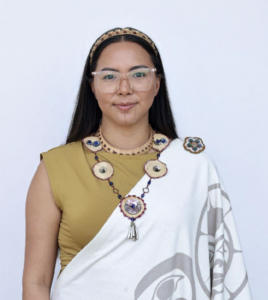 Katisha Paul is advancing Indigenous priorities at home and abroad
2024 cohort
Katisha Paul (W̱JOȽEȽP (Tsartlip First Nation) and Lil’wat Nation) has taken her policy experience in several directions. After completing the LEVEL Youth Policy Program, she became a full-time policy analyst with the BC First Nations Justice Council.
Today, she’s also Co-Chair of the UN Indigenous Youth Caucus, a Women’s Representative for the Union of British Columbia Indian Chiefs, and a board member for the First Nations Leadership and Governance Association and the Urban Native Youth Association. Somewhere along the way, she began pursuing a Political Science degree at Langara College and founded NEPENEḴ, an Indigenous consultancy that works to advance Indigenous priorities with First Nations, non-profits and governments.
Katisha’s path shows that working in policy doesn’t mean sticking with a strict path either. Advocacy can often deepen your perspective with professional work, and vice versa.
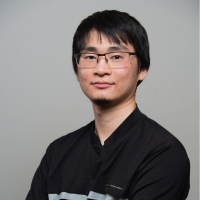
Jimmy Ho is making his mark on municipal policy
2022 cohort
Municipal policy is one of the most direct ways to shape the communities people call home. For Jimmy Ho, that came into focus through a conversation with the mentor he was matched with at LEVEL YPP. And this interest deepened during a one-year municipal internship in Pouce Coupe, a village of nearly 800 people in northeastern B.C. This internship was through the Northern Development Initiative Trust.
There, Jimmy saw how decisions about land use, zoning, and community planning shape everything from housing to healthcare to food security. He also learned how much residents influence local government decisions.
In Jimmy’s experience, people don’t need to be policy experts to drive change. “Some of the most effective policy changes happen because people impacted by them stepped forward to challenge assumptions,” he says.
After completing his internship earlier this year, Jimmy moved to Prince George to pursue impact strategy consulting supporting nonprofits and public institutions, including those in rural and remote communities. He hopes to help bridge different perspectives across B.C. and help local communities be more active as participants in the policies that affect them.
Pursue your own policy path
Inspired by these alum’s stories? Applications are now open for the LEVEL Youth Policy Program.