

We’re excited to announce some familiar faces returning for the next LEVEL Youth Policy Program! They will soon be joined by many more policy leaders and community organizers who can’t wait to meet the next cohort of youth looking to influence policy. LEVEL YPP instructors are passionate about sharing what they know and will both teach and learn from participants.
Each participant is paired with a mentor, who then helps them develop their policy ask for the program’s final project. Mentors act as both sounding board and guiding force for ideation, strategy, and research. Additionally, we’ll be pairing participants with a writing coach to help get their ideas across persuasively to their end-audience (more on that soon).
See who participants learned from in the 2024 cohort.
Meet some of the returning mentors and advisors who will be part of the YPP community:
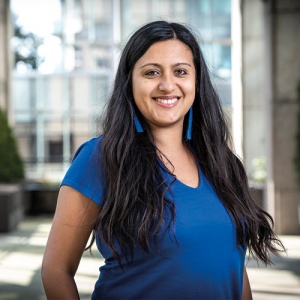 Nathalie Lozano-Neira
For more than 14 years, Nathalie has worked alongside migrant and racialized communities as a facilitator, youth worker, and researcher. She’s taught LEVEL Youth Policy Program participants since our first cohort in 2019.
What keeps her coming back? The young people themselves, and the desire to offer them what they need to succeed. Part of that is a sense of leadership that’s rooted in relationships and the collective. “Leadership is not about producing individual ‘young leaders’ who succeed on their own. It is about building relationships, collective capacity, and a sense of responsibility to one another,” she said.
Nathalie is a Colombian-Canadian scholar and educator who first arrived in Vancouver as a refugee. Today, she’s working on her PhD at UBC’s Institute for Gender, Race, Sexuality and Social Justice. She’s currently researching Indigenous women’s transnational solidarity, relationality, and collective mobilization across Abya Yala/Turtle Island (both names chosen by Indigenous peoples to refer to the American continent). She believes meaningful relationships with Indigenous peoples and a commitment to decolonization are essential foundations for advancing social justice.
Fun fact: Nathalie mentored Roberta Longclaws – check out her profile.
 Vibhor Garg
Much of vibhor’s two decades in non-profits has been focused on ensuring youth have space to lead and are involved in making decisions that affect their lives. He’s behind much of the content in the program workbook and has been part of the program since 2019.
Young people inspire him, and he finds that they often continue to challenge his own thinking. He believes that youth already bring deep expertise in how to engage their communities. “They also aren’t as cynical and come up with innovative ideas that just need an opportunity to be tested,” he said.
He’s driven to create spaces for Indigenous and racialized youth to lead and help youth in social justice movements gain more equitable access to resources. Today, he’s also on the board of Groundswell Social Justice Trust Fund.
Ginger Gosnell-Meyers
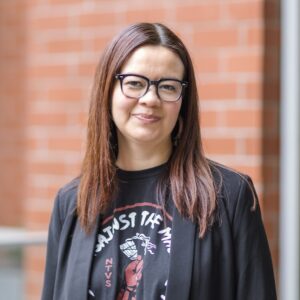 Ginger is a nationally recognized leader who has been challenging colonial systems in non-profits, urban planning, and public policy for more than 20 years. By the time she taught her first LEVEL YPP cohort in 2019, she had already played an integral role in making Vancouver the world’s first official City of Reconciliation.
Today, as a Nisga’a and Kwakwa̱ka̱ʼwakw woman, she’s embedding ways to meaningfully reflect Indigenous knowledge into how development projects are planned and designed. Ultimately, she wants to broaden her focus to meet commitments to the United Nations Declaration on the Rights of Indigenous Peoples and the Truth and Reconciliation Commission. She’s a prolific volunteer, and currently is the board chair of Greenpeace Canada.